
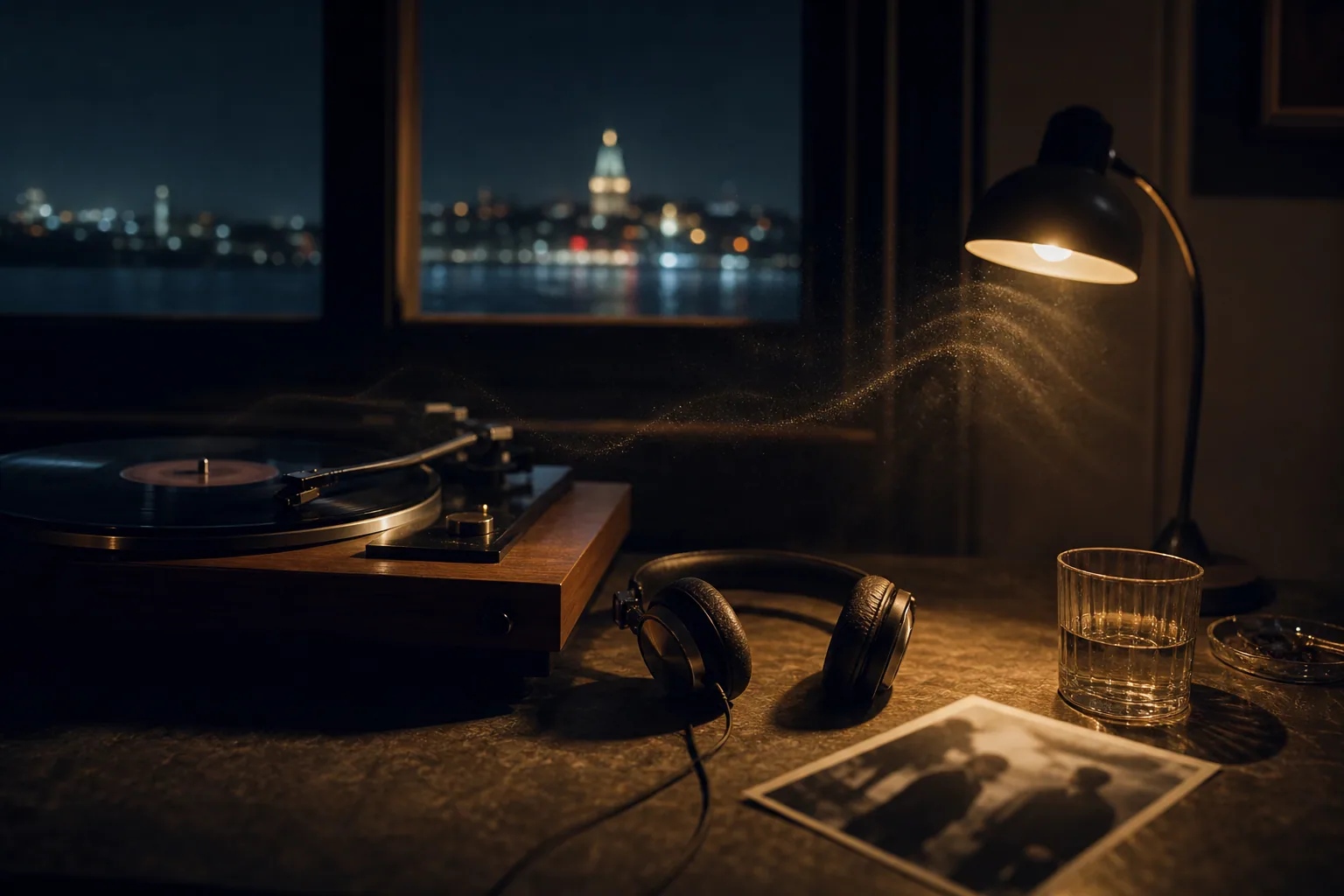
Music does not store time; it carries us to who we were inside it. Why some melodies open the same door years later, and where memory and emotion meet in music. I am writing this record not simply to reach a conclusion, but to make visible the space the question opens in me. Instead of closing an idea too quickly, I follow how it appears in daily life, work and relationships. I want to leave an open table for thought rather than a final judgement. I therefore try to keep a distance between personal experience and a universal claim. I find value in an idea not when it offers the same answer to everyone, but when it opens new and honest questions inside different lives.
A DOOR OPENED BY THE FIRST NOTE
A few seconds of certain songs can return a place, a face or an old feeling. We do not work to remember; music opens the door. We listen not only with our ears. Our age, the people beside us and the future we did not yet know become part of the recording.
THE SAME SONG, ANOTHER PERSON. Years later the music is unchanged, but the listener is different. A hopeful line may sound sad; a sentence once ignored may become central. The song creates a short conversation between former and present selves. Perhaps we return because both can be heard at once.
THE SHORTCUT TO FEELING. Words sometimes take a long route to explain emotion. Music reaches the body through rhythm, tone and silence. In periods we cannot describe, we may repeat one song. It does not solve the problem, but makes the feeling less alone and gives it a form we can carry for a few minutes.
When we hear a song years later, we remember more than an event from that period. For a moment we return to the body, expectations and way of seeing the world that belonged to us then. The same melody played in another room can carry the light of the place where we first heard it. Memory does not store music like an archive file; it places it inside a network connected to emotion, scent and image. The first few notes activate the entire network. This is why certain songs catch us unprepared: they show that the key remains in the door of a time we believed we had locked away.
Sometimes we do not choose to play a song; we wait for it to find us by chance. There is a difference between deliberate selection and coincidence that changes the intensity of feeling. A melody heard unexpectedly crosses our defences and opens a small crack in the middle of ordinary life. For a few minutes, past and present stand together. Then the song ends, traffic continues and people in the room resume their conversation, yet something inside us has shifted slightly. Perhaps music's power lies here: it makes another current of time audible without stopping the life flowing above it.
RETURNING
Returning to an old song is not always living in the past. Sometimes we measure how far we have changed or search for what remains. When the melody ends we return to the present carrying a small detail, an old courage or a memory that no longer hurts. Music does not restore time; it rearranges our relationship with it.
As we return to a song, its meaning changes with us. A line heard as hope in youth may carry loss years later. A melody that once caused pain can become evidence that we survived. The work remains the same, but the listener has changed, so the relationship is rewritten. The songs we love are therefore not frozen pieces of the past but emotional texts updated throughout our lives. With every listening, we place a new note beside the old interpretation. Music does not bring time back; it makes audible the way we have changed while passing through it.
Perhaps we return to certain songs not because we long for the past, but because we need to hear the continuity of our lives. As homes, people, work and beliefs change, the same melody builds a thin bridge between different periods. The person who first heard that song and the person I am today are not the same, yet for a few minutes they acknowledge one another. The encounter can be sad or strengthening. It shows how much has changed while reminding us that we are not entirely disconnected. Human memory is imperfect and its story fragmented; music can create emotional continuity between the pieces. When the song ends, we do not necessarily wish to remain in the past. We have simply heard the sound of the road from there to here, and return to the present feeling slightly more whole.
READER SIGNAL
Leave a sentence on this file.
Your signal passes a digital check before entering the archive.