
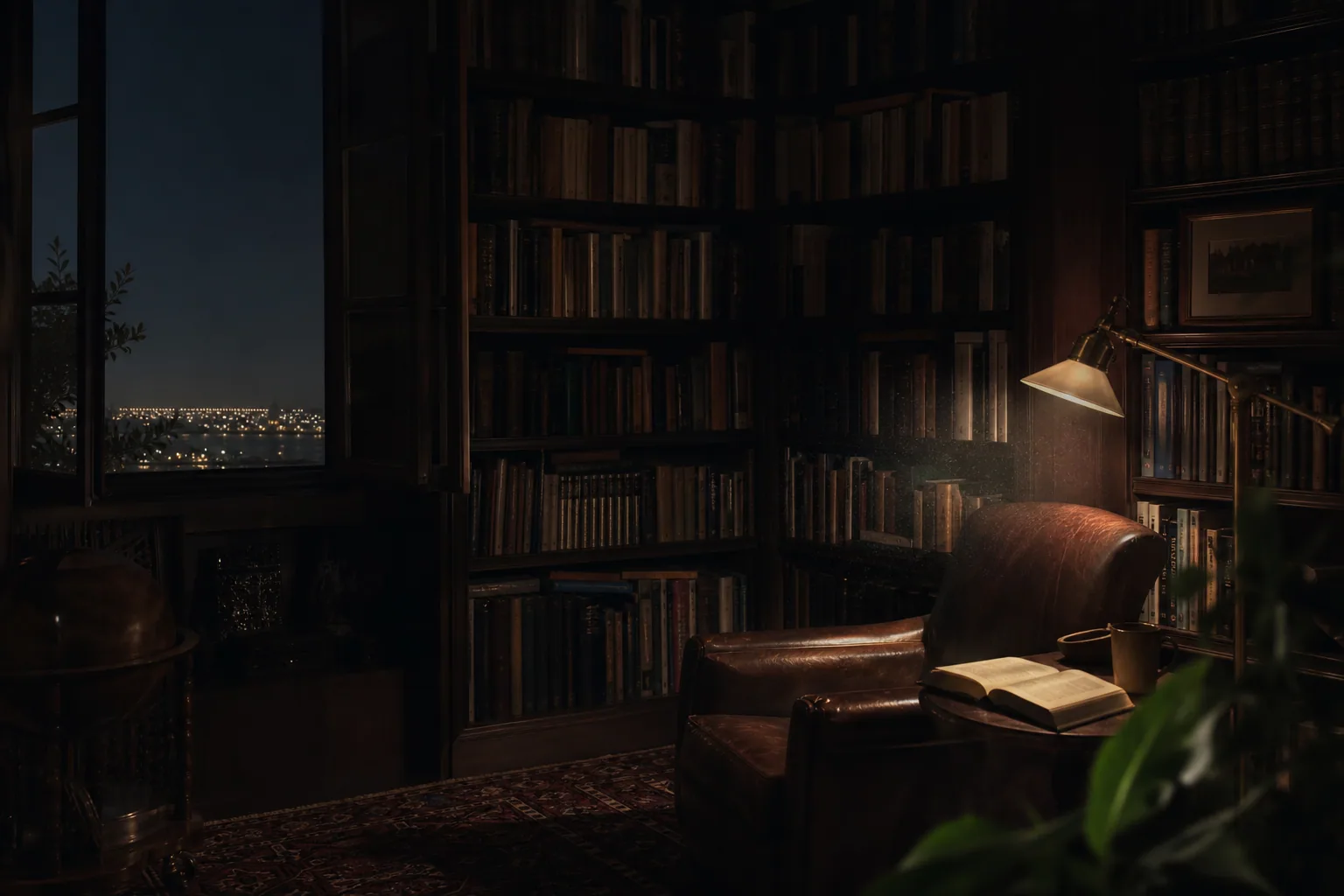
Silence is sometimes not absence, but the balance of accumulated voices. How books change a home, the memory of reading corners and the productive side of silence. I am writing this record not simply to reach a conclusion, but to make visible the space the question opens in me. Instead of closing an idea too quickly, I follow how it appears in daily life, work and relationships. I want to leave an open table for thought rather than a final judgement. I therefore try to keep a distance between personal experience and a universal claim. I find value in an idea not when it offers the same answer to everyone, but when it opens new and honest questions inside different lives.
A SHELF IS NEVER ONLY A SHELF
As books multiply, they fill more than walls; they change the time of rooms. A novel read years ago, an unfinished essay and an unopened book hold different periods side by side. A library is a visible map of curiosity, showing which subjects we return to and which questions remain incomplete.
THE MEMORY OF A READING CORNER. Books read in the same chair gradually blend. Alongside a sentence we remember rain, coffee or a period of life. Place becomes an invisible footnote to the text. Reading is not only mental; body, light and room take part in a private ritual.
VOICES INSIDE SILENCE. A room of books looks quiet but is crowded with writers, characters and former versions of ourselves. Its silence is not the absence of sound but a balance in which voices do not overpower one another. We need such places to step away from speed and distinguish our own thought again.
Silence in a home full of books is never entirely empty. Hundreds of lives standing side by side alter the atmosphere even with their covers closed. Remembering where a book was bought, during which period it was read or why a piece of paper was left between its pages creates an invisible map of time inside the house. Some books are kept not for information but because they open onto a particular version of ourselves. When we hold the same volume years later, we meet the former self who read it before we meet the text. The home becomes not only where we live, but a physical memory in which layers of identity accumulate.
I value the speed and reach of digital text, but the physical book establishes a different relationship with a home. It occupies space, gathers dust and has weight when moved, making our choices visible. It shows which ideas we have given actual room in our lives. Over time, shelves tell the story not only of what we have read but what we could not finish and what we still remain curious about. They are not a completed collection but an open draft of a life. The silence of a home full of books is therefore both peaceful and inviting; every shelf holds a conversation that has not yet begun.
RETURNING HOME
A good library is never finished. It changes, overflows, is edited and rebuilt. Some books leave us; others travel with us for years. Seeing a familiar spine upon returning home opens a door to an earlier thought. Perhaps that is why a home filled with books makes returning to oneself a little easier.
The value of a reading corner does not come from perfect decoration. The way afternoon light falls on a wall, the worn fabric of a chair or a pen forgotten on a nearby table may be what makes the space ours. Hours spent there create an invisible ritual. The mind recognises the place and slowly withdraws from everyday noise. From outside, nothing appears to be happening, yet the reader enters another life, changes a thought and returns as someone slightly different. The productivity of silence is hidden precisely inside this invisible movement.
I like to imagine that the books in a home eventually speak to one another. Two writers placed side by side form an unexpected connection in our minds even when years and languages separate them. When we leave a novel and open a book about technology, questions from the first text enter the sentences of the second. A library is therefore less an alphabetical store than a personal network of thought. As its order changes, so do its connections; a book unseen for years can create another possibility of reading when it appears on a different shelf. Perhaps the most beautiful quality of a library is not that it contains every answer, but that it can hold voices that disagree in the same room. The silence of the home does not suppress this plurality. It builds a calm space where we can decide which voice to hear and when.
READER SIGNAL
Leave a sentence on this file.
Your signal passes a digital check before entering the archive.