
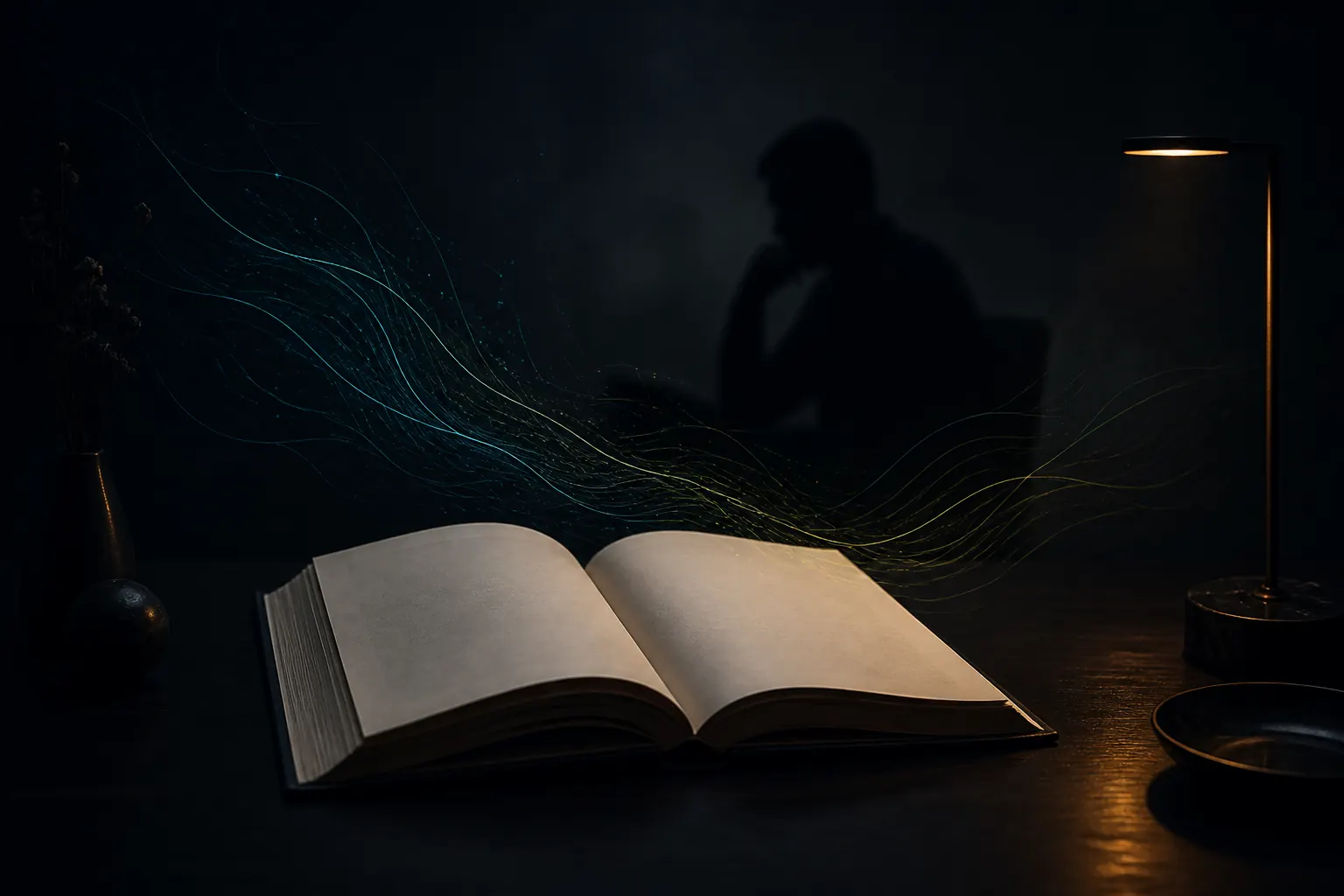
A story lives through what the reader completes as much as through what the writer tells. Following the power of unexplained details, imagination and the shared work of literature. I am writing this record not simply to reach a conclusion, but to make visible the space the question opens in me. Instead of closing an idea too quickly, I follow how it appears in daily life, work and relationships. I want to leave an open table for thought rather than a final judgement. I therefore try to keep a distance between personal experience and a universal claim. I find value in an idea not when it offers the same answer to everyone, but when it opens new and honest questions inside different lives.
SHOWING EVERYTHING
A writer may want to explain every reason, silence and piece of history. It feels safe, but safe is not always alive. A text that leaves nothing to the reader locks its own doors. I prefer to leave some answers to intuition and let the reader discover the pressure around them.
A GAP IS NOT A FAILURE. A good gap is not forgetfulness. It is a space with enough signs around it, but without one forced meaning. Spreading a character's past through behaviour gives the reader a way into the text. The writer is not surrendering control; they are making room for the story to breathe.
THE READER AS PARTNER. When I finish a novel, the world is no longer mine alone. A reader may find a meaning I did not notice while writing. Reading is not passive consumption. The reader brings memory, fear and questions to the page, and the story enters another life at that meeting.
When a reader enters a text, they bring the light of their own life into the world I built. The same sentence can offer comfort to one person and unease to another. That difference is not a failure; it is the living side of literature. I prefer to leave some rooms lit rather than close every door. The place where the reader enters should remain a little uncertain.
That is why I leave traces instead of final answers in certain places. I may not say entirely why a character returned, why an object was hidden or which sentence broke a relationship. Yet I leave enough feeling and detail for the reader to reach the possibility themselves. Mystery deepens not by hiding information, but by arranging it so experience can complete it.
AFTER THE LAST SENTENCE
The final sentence does not need to close everything. A good ending may be a question the reader carries after closing the book. I want the text to leave a trace that can be met again in ordinary life. Literature ends the sentence, not the thought.
Leaving space is not the same as not knowing what to say. It is a serious decision about information, structure and trust. If I explain everything, I reduce the reader's imagination to the role of a consumer. Reading is a meeting between two minds across different times. Part of the text comes from me, and part of it is made from the reader's own silence.
When the text ends, the story should leave my control a little. If an image, a sentence or an unspoken possibility remains after the reader closes the book, the writing continues to live. For me, a good reading does not solve every question; it sends some questions back into the reader's life. The gap is where that return happens.
READER SIGNAL
Leave a sentence on this file.
Your signal passes a digital check before entering the archive.