
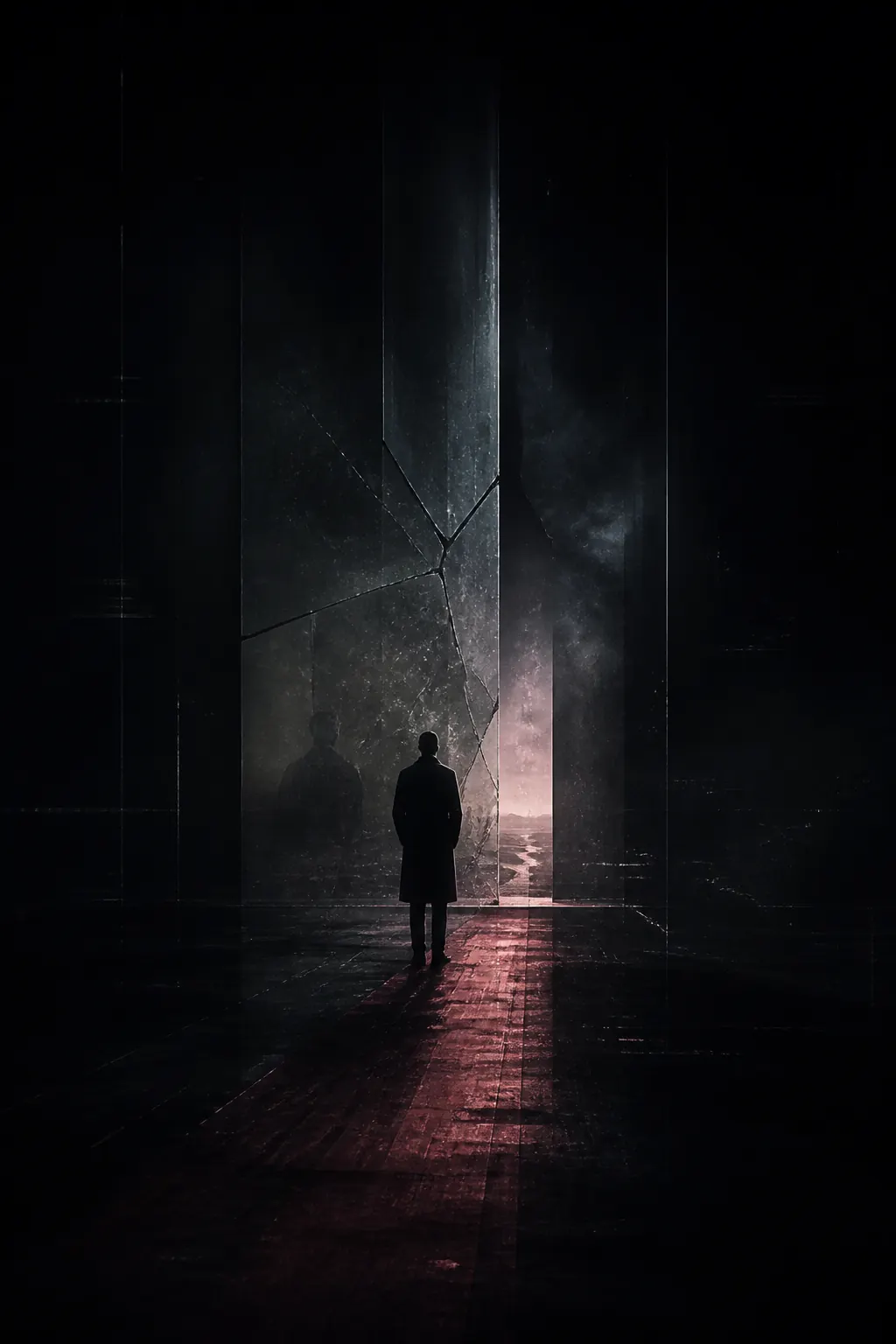
Darkness does not begin when a story turns off the light, but when a character starts believing the story they tell themselves. I look for darkness in novels not only in events, but in the sentences characters hide from themselves. I am writing this record not simply to reach a conclusion, but to make visible the space the question opens in me. Instead of closing an idea too quickly, I follow how it appears in daily life, work and relationships. I want to leave an open table for thought rather than a final judgement. I therefore try to keep a distance between personal experience and a universal claim. I find value in an idea not when it offers the same answer to everyone, but when it opens new and honest questions inside different lives.
EVIL DOES NOT ARRIVE WITH NOISE
What makes a novel dark is not always murder, loss or a grand betrayal. Sometimes darkness begins in the calm sentence a character uses while explaining what they have done. When a person quietly moves pieces of truth to justify themselves, the reader sees a crack before seeing the event. Evil rarely shouts; it finds a reasonable explanation and takes its place at the table.
THE LIE A CHARACTER TELLS THEMSELVES. A well-written character does not only lie to others; they persuade themselves. Their actions become necessities and the people they hurt become a deserved consequence. The tension rises between the version the character tells and the reality suggested by the scenes. As that distance grows, the story begins to say more.
THE READER'S MORAL DISCOMFORT. I do not expect a novel to show only good people. Literature becomes powerful when it brings us near the mind of someone we believe we could never resemble. But understanding is not absolution. Seeing a character's wound does not erase the wound they cause. The reader must carry both truths: understand why someone became this way and refuse to remove responsibility for what they did.
Most dark characters do not see themselves as evil. To them, every action has a reason, every wound has a counter-wound and every lie has a necessary explanation. The power of a novel lies not only in exposing these defences, but in showing how they are built. The reader watches an excuse become a thought, a thought become a habit and a habit become a character. Darkness stops being distant; it becomes the sum of small steps taken to protect the self.
A novel's darkness deepens not when the reader stops judging, but when the reader begins to examine their judgement again. While trying to understand a character's action, we test our own measures. We notice which mistakes we find forgivable and which ones we believe cannot be undone. This movement turns the novel from a plot into a personal mirror.
THE HUMAN INSIDE THE DARKNESS
A novel opens a real space when it makes a character visible in all their contradictions rather than simply condemning them. Characters without a dark side may feel safe, but they rarely remain in memory. The novels that stay with me show which boundaries a person crosses to protect themselves. Literature asks a difficult question: we recognise darkness when it begins in someone else, but when do we notice the first excuse inside ourselves?
What makes a character memorable is not perfection, but the way they carry their contradiction. Sometimes the person hiding the most speaks the most honest sentence. Sometimes the character who commits the greatest betrayal is the one who seemed most fragile at the beginning. These reversals keep literature alive because real people's visible faces and the marks they leave on others are not always the same.
This is why the discomfort literature leaves behind can be restorative. After closing the book, we continue thinking not only about the character, but about our own quick conclusions. A good novel does not multiply answers; it gives us the strength to look at a question for longer. Darkness continues to live for a while in the reader's mind after the story ends.
READER SIGNAL
Leave a sentence on this file.
Your signal passes a digital check before entering the archive.