
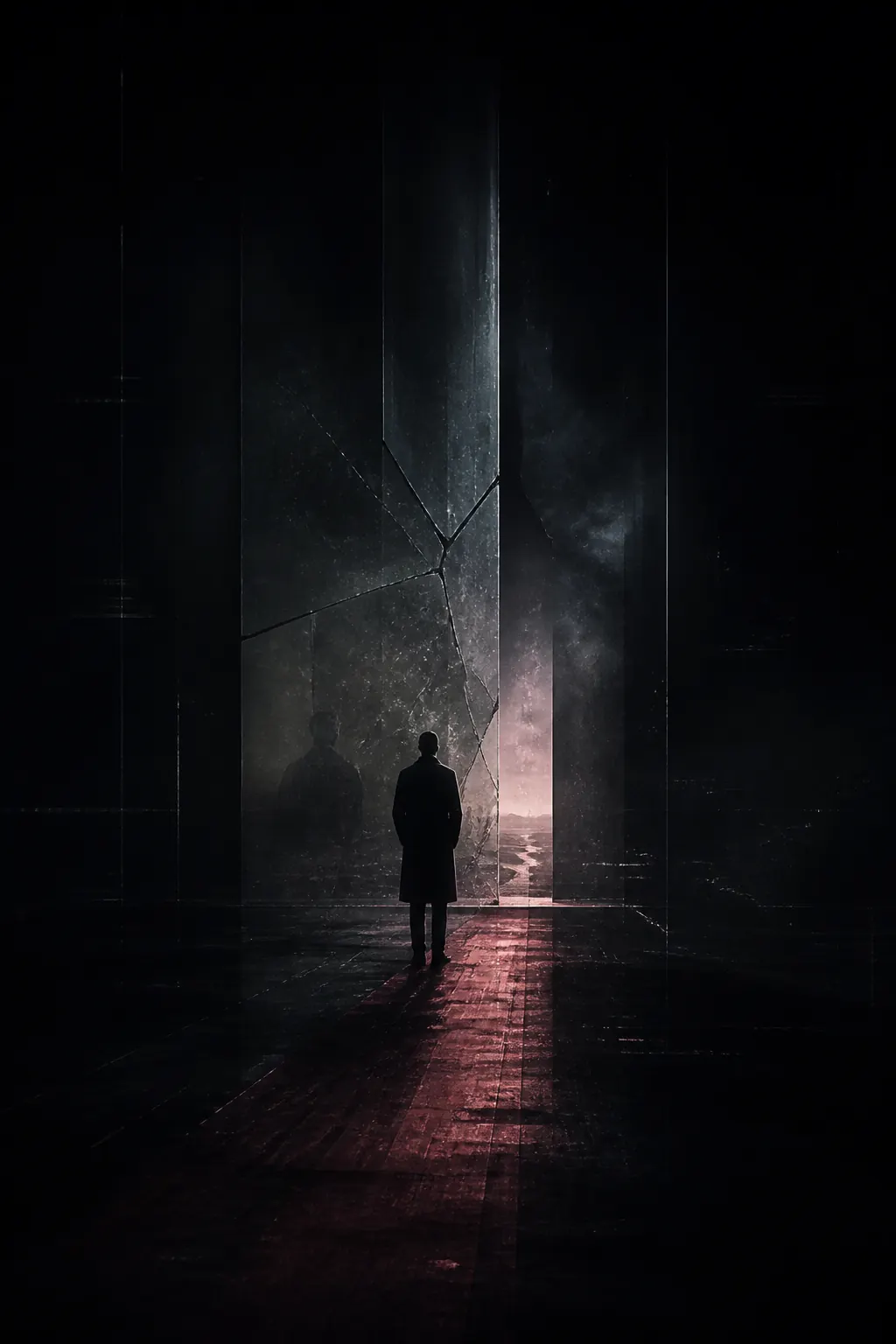
Some characters explain themselves more clearly where they do not speak. I follow silence, swallowed sentences and the way a character approaches their own truth while writing. I am writing this record not simply to reach a conclusion, but to make visible the space the question opens in me. Instead of closing an idea too quickly, I follow how it appears in daily life, work and relationships. I want to leave an open table for thought rather than a final judgement. I therefore try to keep a distance between personal experience and a universal claim. I find value in an idea not when it offers the same answer to everyone, but when it opens new and honest questions inside different lives.
WHERE WORDS ARE NOT ENOUGH
A character's silence does not mean they have nothing to say. Sometimes a sentence is harder than accepting the truth. Sometimes silence protects another person or preserves a story the character tells themselves. I do not rush to explain it, because the place where a person goes quiet is often the most alive part of a scene.
THE SWALLOWED SENTENCE. The sentence a character refuses to say moves behind the sentence they do say. The reader may not hear it literally, but senses it through rhythm, a change in gaze or an abrupt turn in conversation. When writing, I look not only at what a character says but what they swallow. Tension often forms in that small distance.
THE ETHICS OF SILENCE. Not every gap is mystery. Silencing a character only to create curiosity turns a person into a device. Silence needs a history, a cost and a reason. The reader may not know it immediately, but should feel that the absence was not random. Mystery is not merely delaying an answer; it is preserving its weight.
The moment a character falls silent can matter as much as the moment they speak. An empty space forms around the unspoken sentence, and the reader places their own intuition inside it. I feel that I reduce a character whenever I start explaining them too quickly. Inner life is not arranged like a case file. A glance, an unfinished gesture or an object left on a table can carry the weight of a confession.
While writing, I pay attention to the places where a character is wrong about themselves. A person may believe they are telling the truth while the distance between what they remember and what they hide gives them away. Sometimes the place where a character falls quiet is also where the writer should resist speaking. Keeping the reader inside the gap for a while does not reduce the story; it lets the story live longer in the mind.
THE RETURN TO SPEECH
When a character breaks their silence, the story is not simply delivering information. The shape of the burden changes. One sentence may open a door between two people or make everything darker. I want speech to be a result of transformation, not a reward. Real conversation begins when a person reaches the point where silence is no longer possible.
Silence is not always wisdom. One character uses it for protection, another as punishment and another retreats because no words are available. The writer must not paint these silences with the same colour. We can reveal a possibility behind behaviour without forcing one explanation upon the reader. A character begins to resemble a real person only when contradictions allow them to breathe.
A character's silence may test the reader's patience, but the test must have a return. By the ending, silence should not remain merely a technique for protecting mystery; it should show how the character changed. A person saying the same sentence years later in a different tone can be stronger than a grand explanation. Real change alters the weight of words before it raises the volume of the voice.
READER SIGNAL
Leave a sentence on this file.
Your signal passes a digital check before entering the archive.